The manufacturing flow begins with the intake of steel bars and rod stock used for oil & gas components. These materials are received in defined lengths and diameters and transferred into horizontal storage systems designed for long, load-bearing parts. Handling equipment such as roller beds, cranes, or gantry systems ensures that components are moved without introducing deformation.
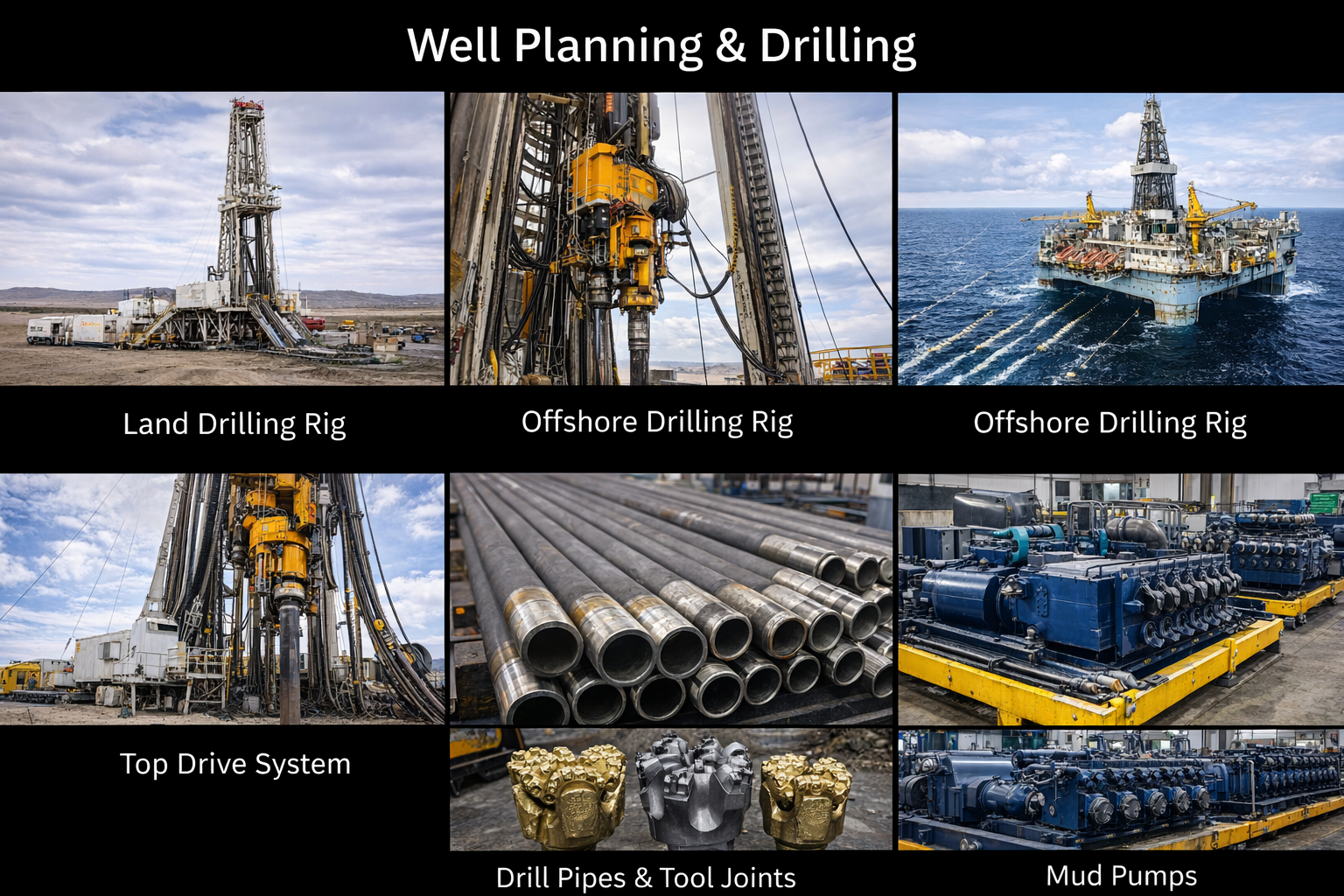
Drilling operations are executed using land and offshore drilling rigs equipped with top drive systems, drill pipes, tool joints, drill bits, and high-pressure mud pumps. These systems work together to safely drill wells to target depth while managing torque, load, and downhole conditions.
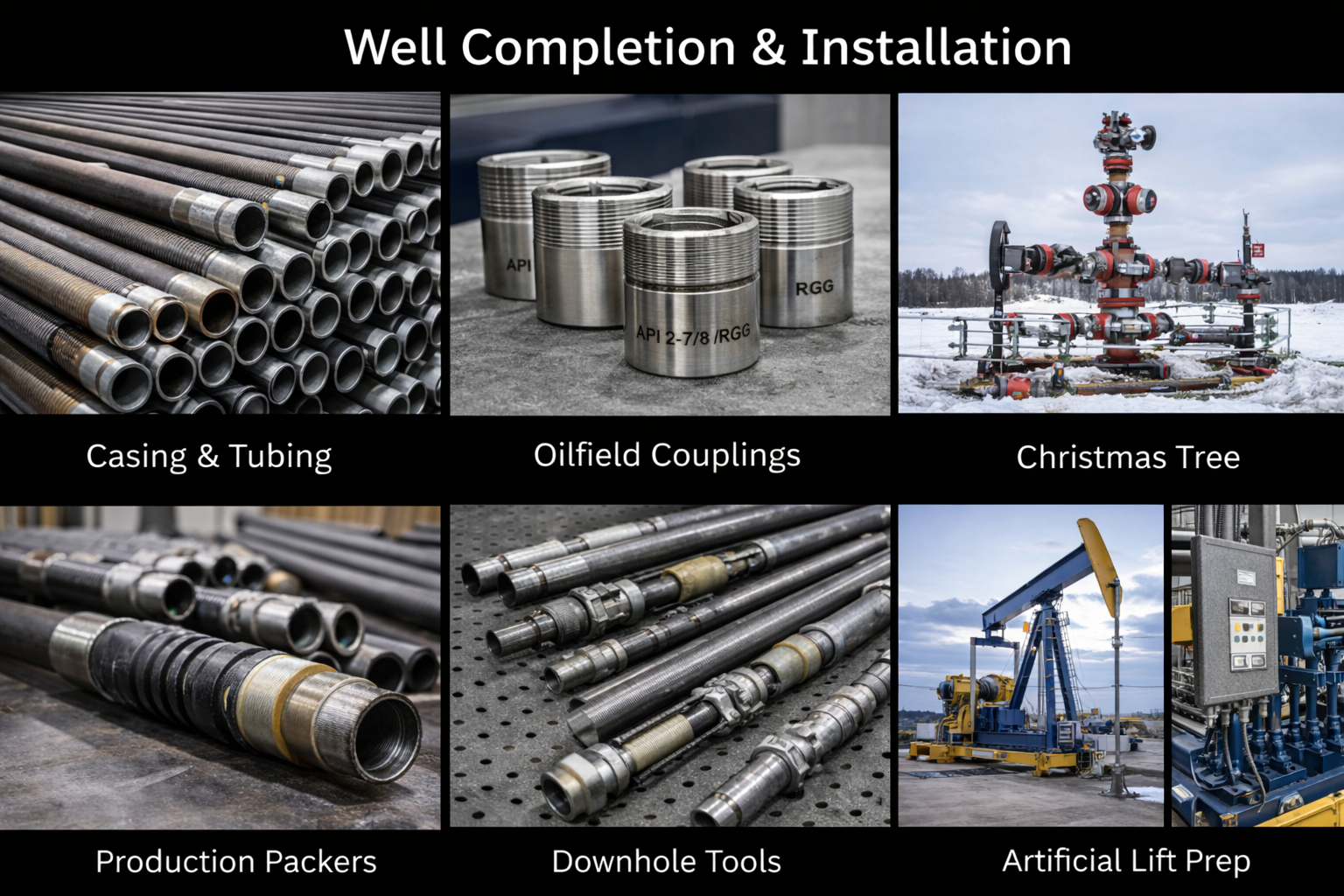
After drilling, casing and tubing are installed using precision-machined couplings, downhole tools, production packers, and wellhead assemblies such as Christmas trees. Artificial lift components are prepared to enable controlled and long-term production from the well.
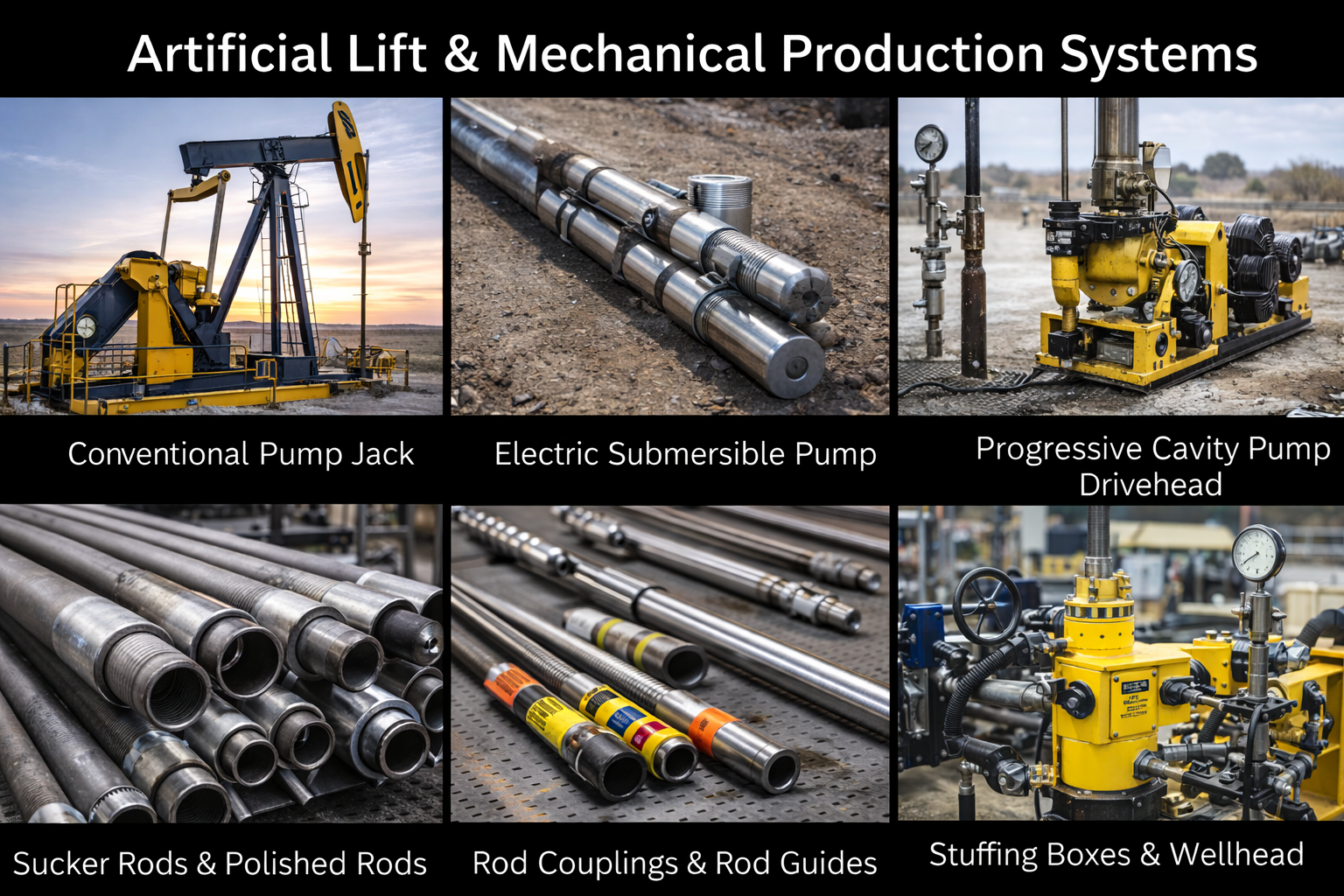
Mechanical production systems lift oil to the surface using pumpjack units, sucker rods, polished rods, rod couplings, electric submersible pumps, progressive cavity pumps, gas lift valves, and wellhead control systems supported by monitoring and control equipment.
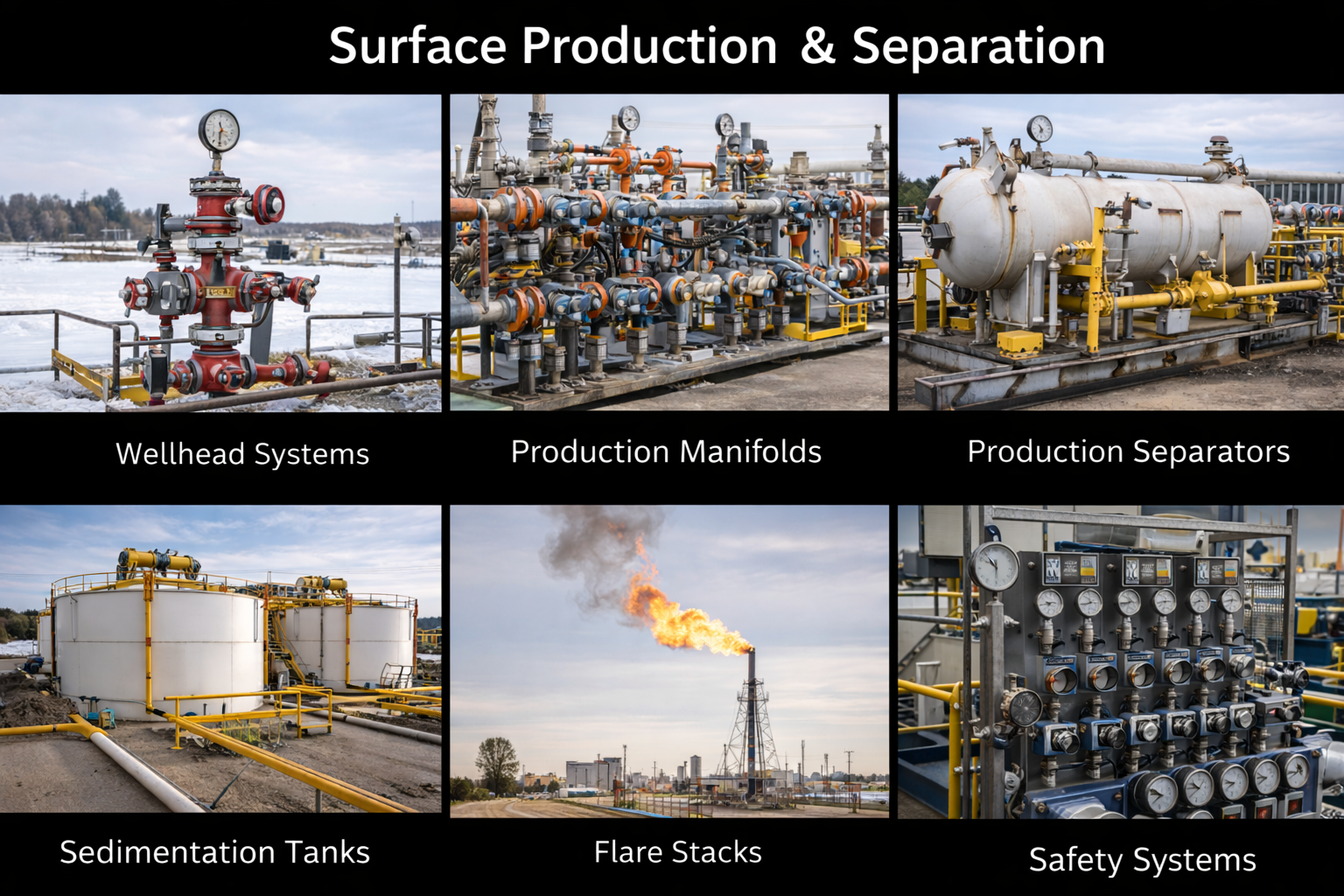
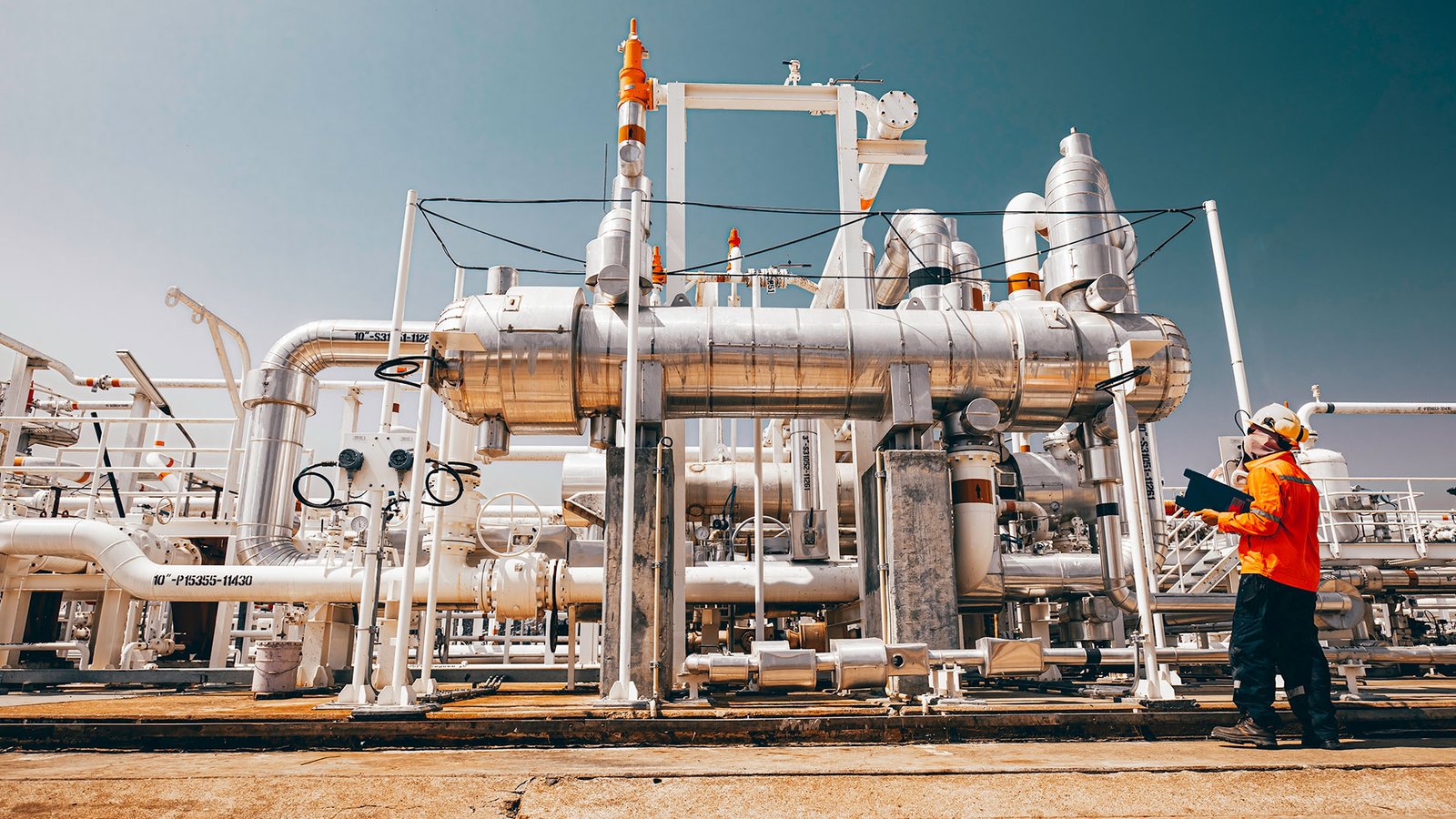
At surface facilities, produced fluids flow through wellhead systems, production manifolds, separators, sedimentation tanks, flare stacks, and safety systems. These units separate oil, gas, and water while maintaining pressure control
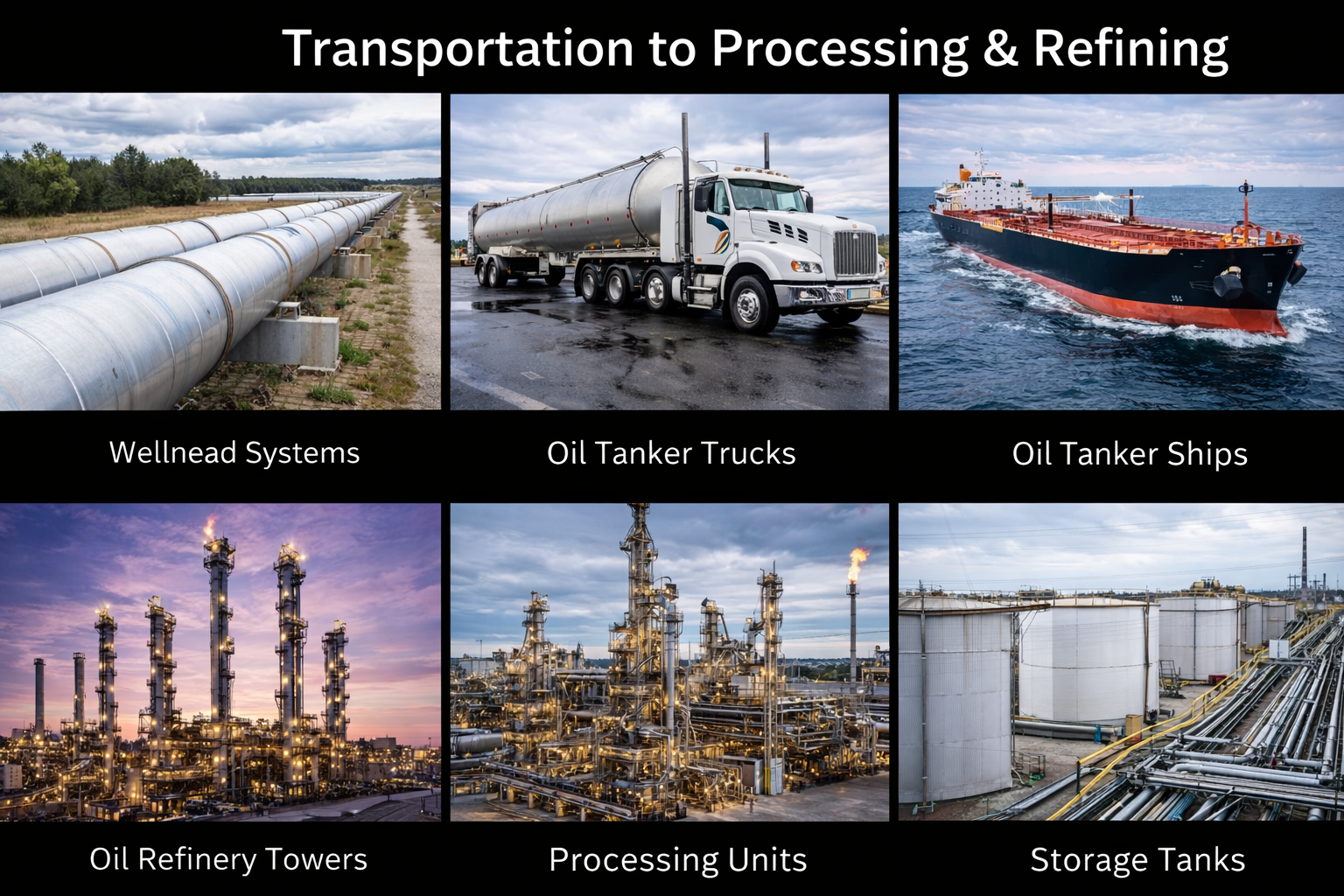
Produced oil is transported via pipelines, tanker trucks, and tanker ships to processing facilities and refineries. Refinery towers, processing units, and storage tanks handle large-scale treatment, refining, and storage before distribution to end markets.
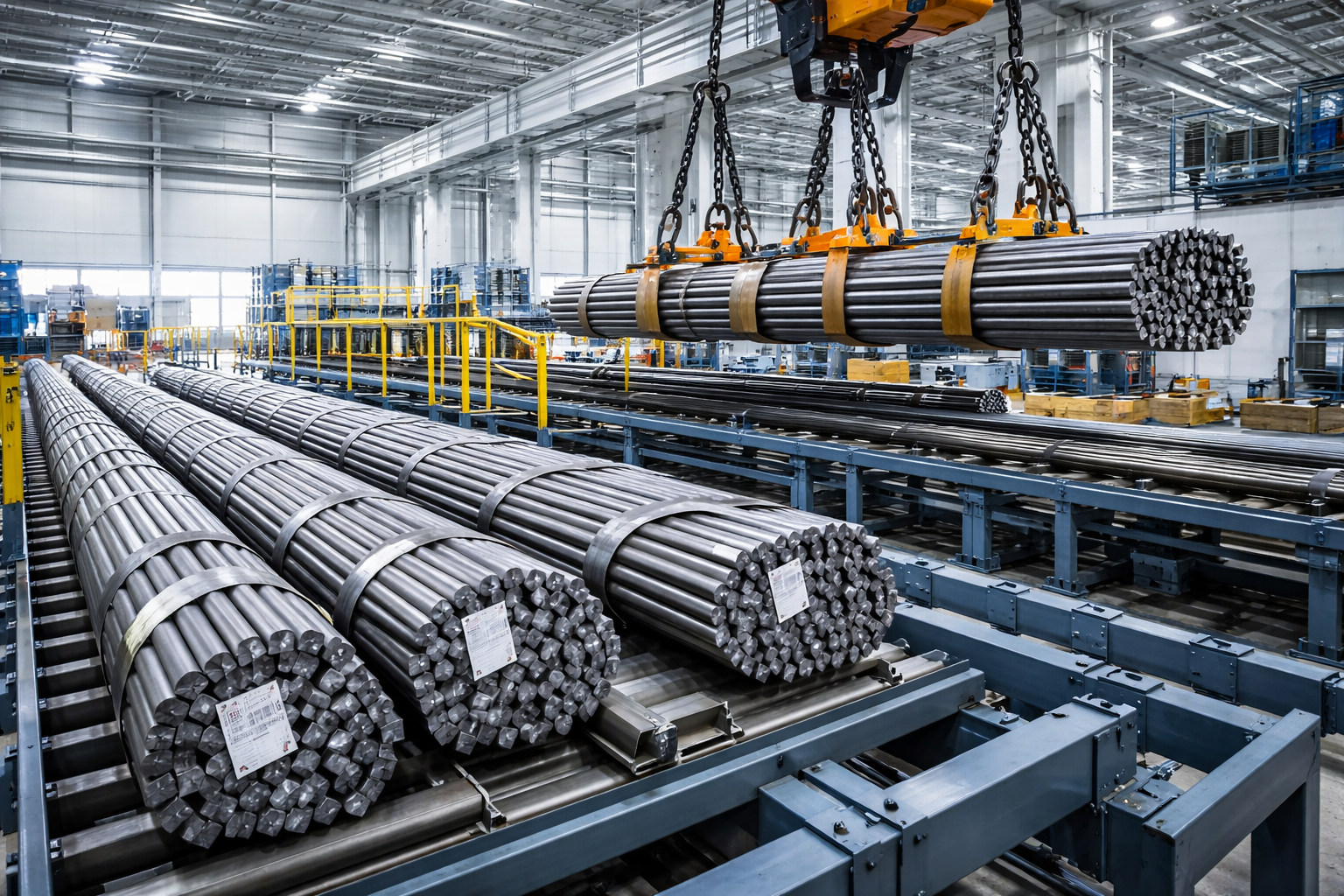
The manufacturing flow begins with the intake of steel bars and rod stock used for oil & gas components. These materials are received in defined lengths and diameters and transferred into horizontal storage systems designed for long, load-bearing parts. Handling equipment such as roller beds, cranes, or gantry systems ensures that components are moved without introducing deformation. At this stage, material identification and traceability are established
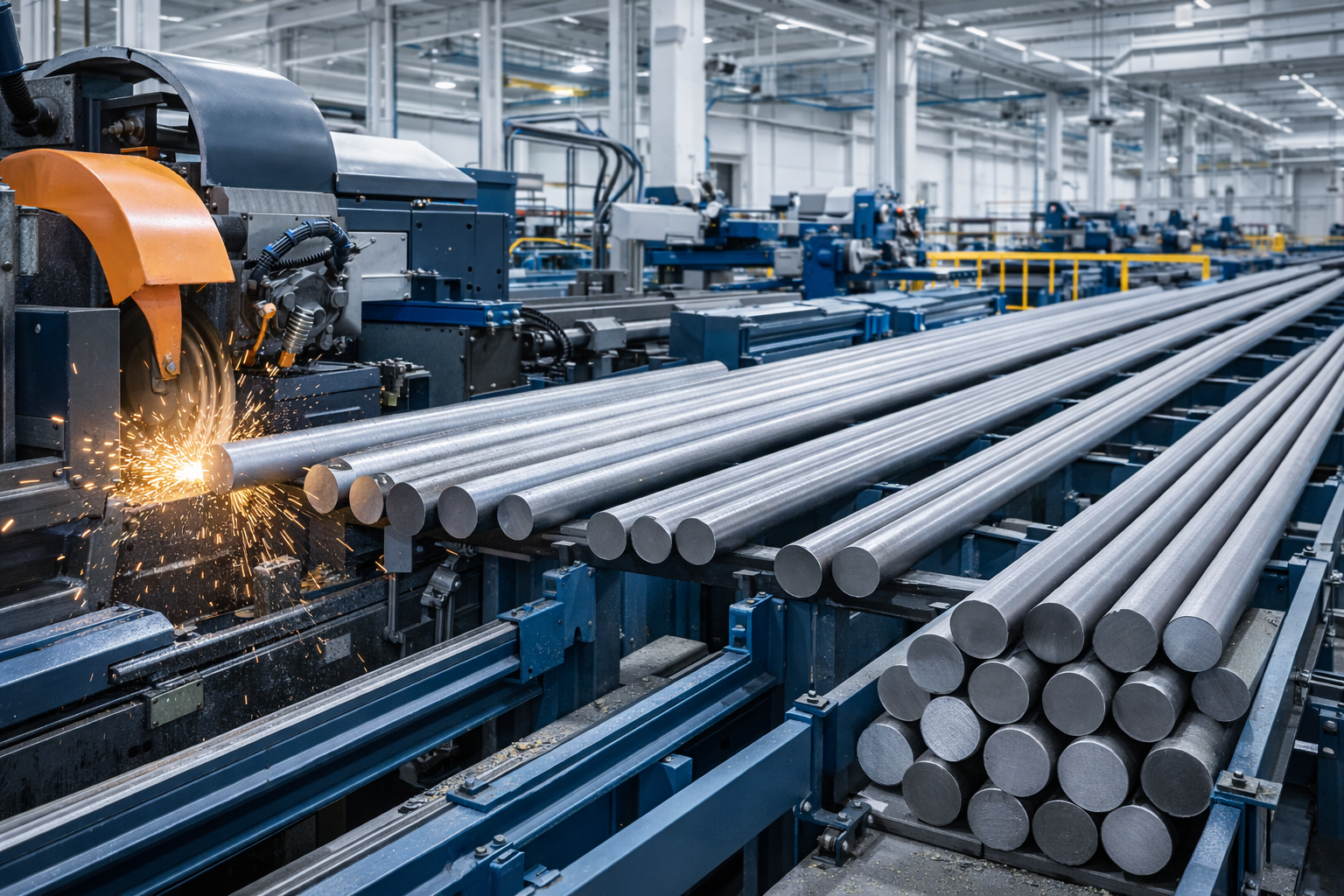
Once material is staged, cutting systems are used to prepare components to exact working lengths. Horizontal cold saws or automated band saw lines perform precise separation with controlled feeds and integrated measurement systems. The cutting process focuses on accuracy and repeatability, ensuring consistent part lengths across production batches while maintaining clean cut surfaces suitable for further processing.
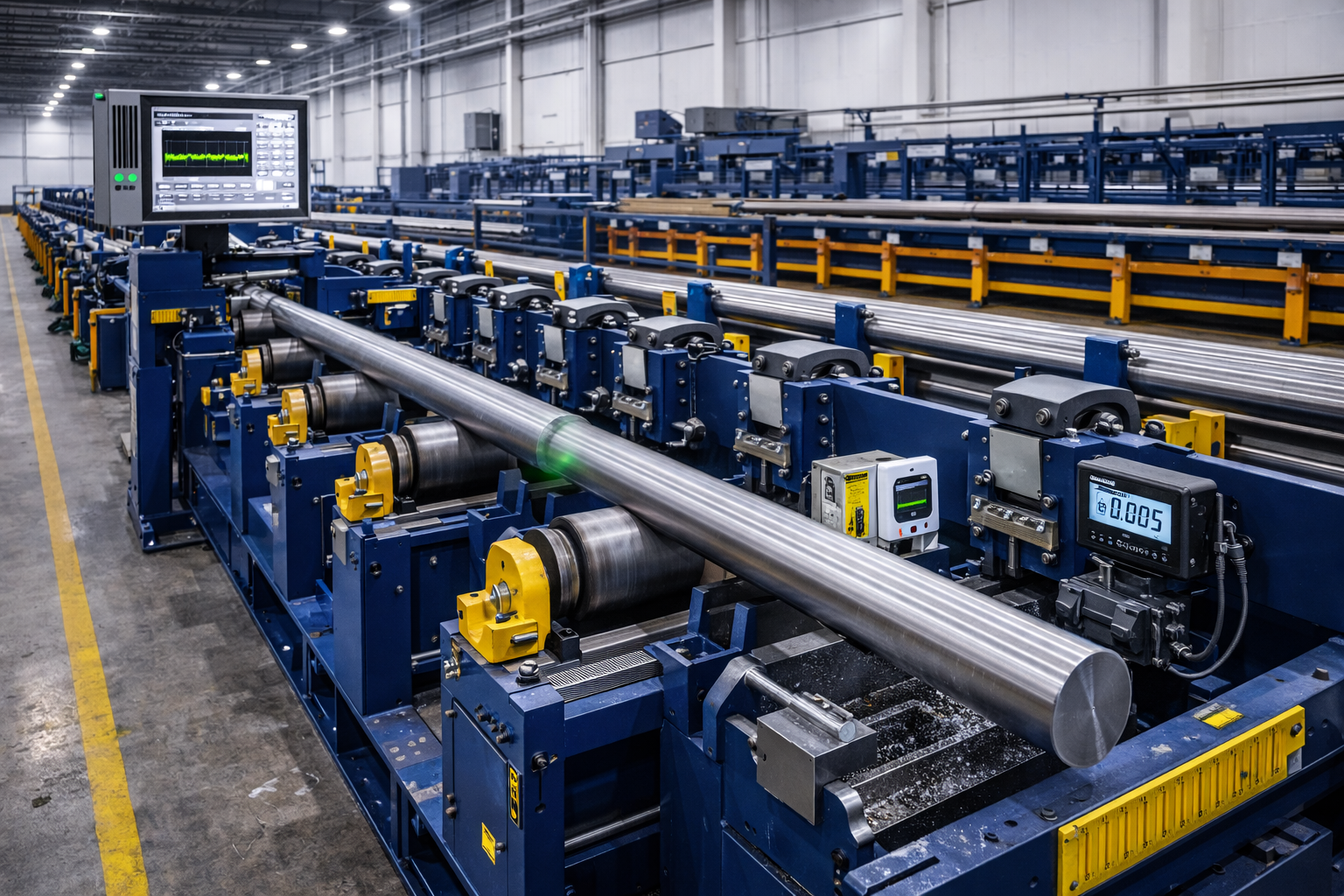
Purpose Ensuring dimensional accuracy and surface quality before forming or machining. Machines & Systems Rod and bar straightening machines Surface cleaning and descaling units Visual and dimensional inspection stations
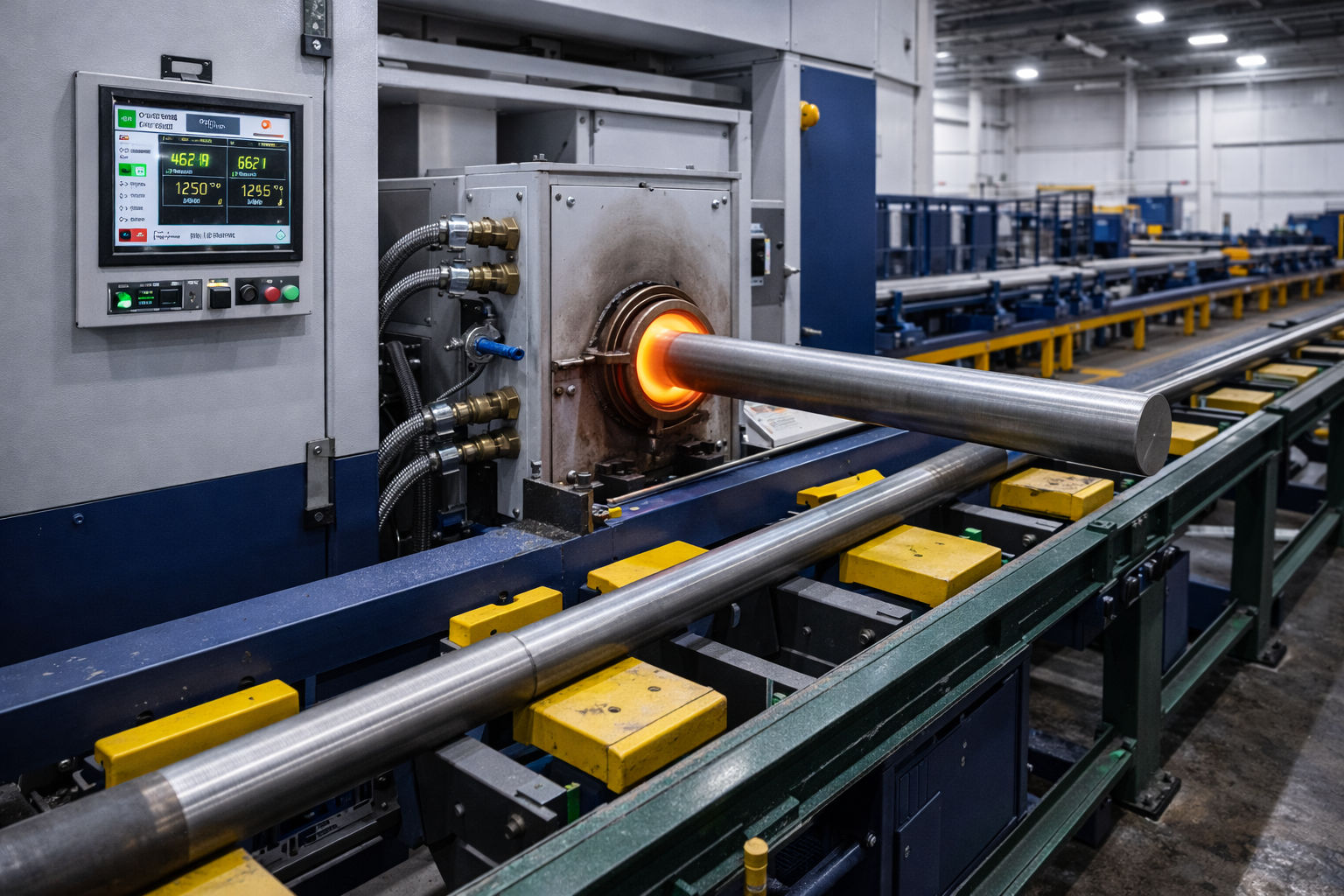
For components requiring shape modification, localized heating is applied using controlled induction systems. Heat is introduced only in specific zones, such as rod ends or connection areas, avoiding unnecessary thermal stress along the full length of the component. This controlled approach prepares material for forming operations while preserving overall geometry and material integrity.
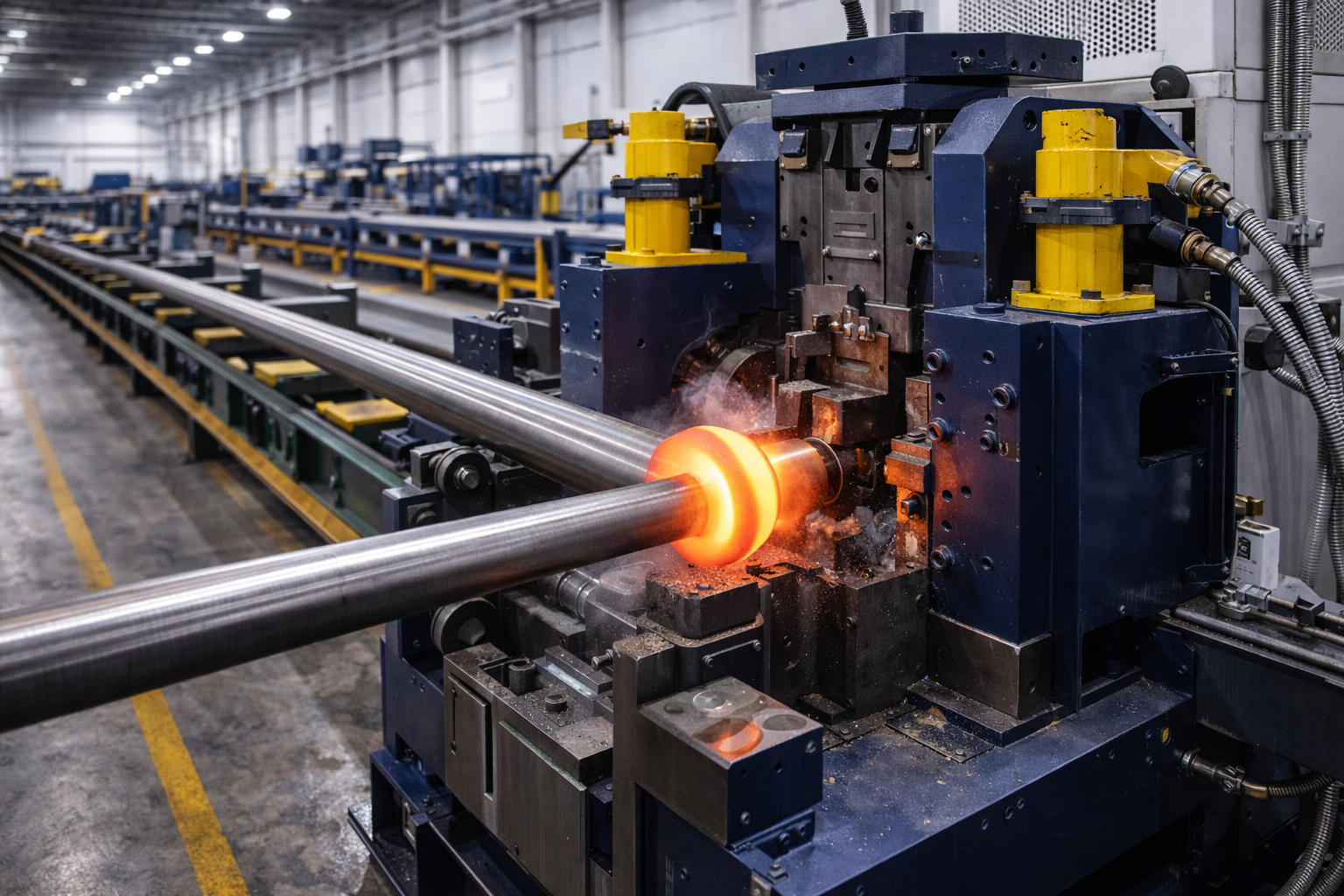
Forming and upsetting machines are used to create functional geometries required for oil & gas applications. These operations typically focus on rod ends, shoulders, or transition areas and are performed with the component held in a horizontal orientation. The machines apply precise forming forces while maintaining straightness and surface quality, supporting repeatable production of load-bearing features.
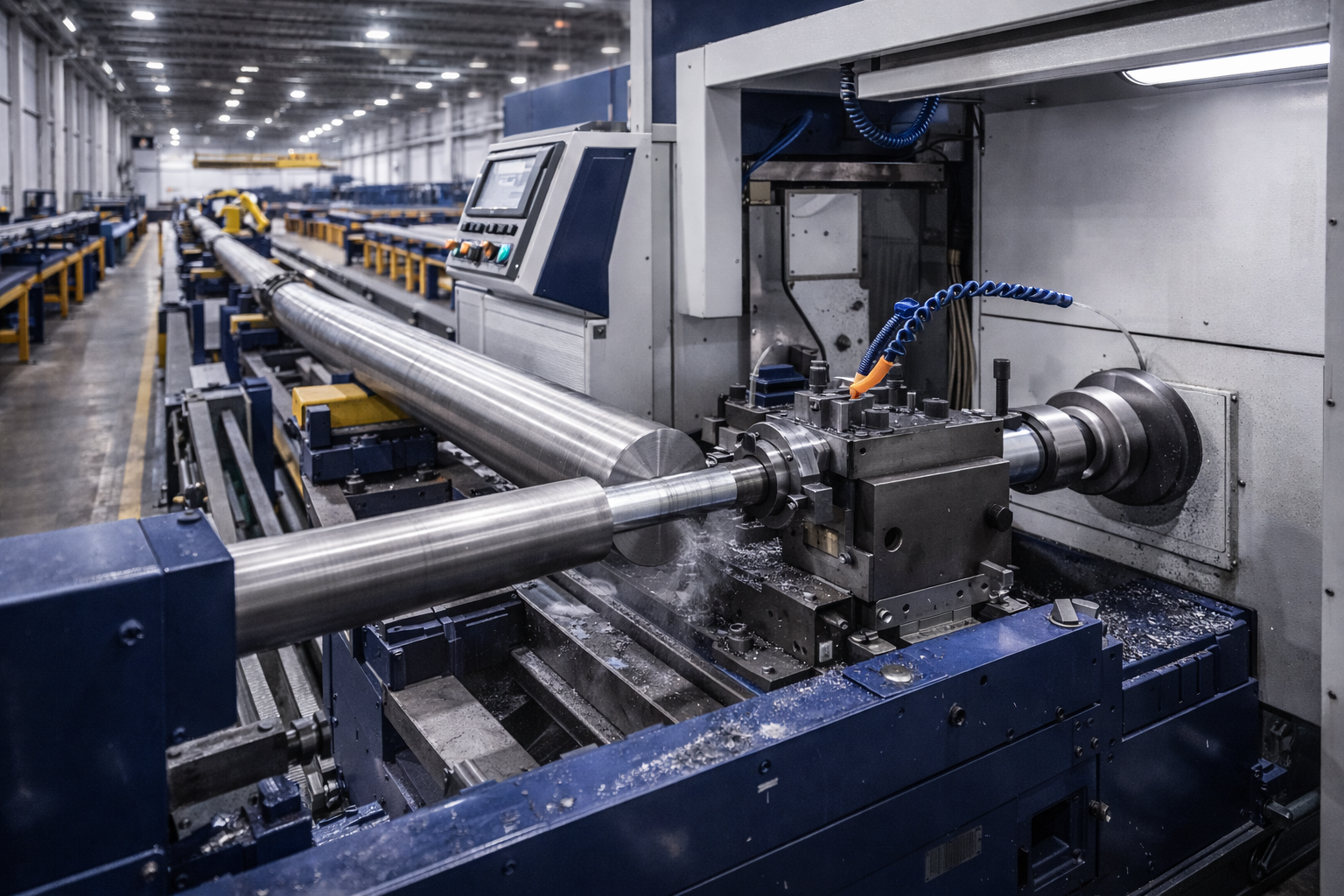
Machining operations refine component geometry to meet tight dimensional tolerances. Long-bed CNC lathes and turning centers process elongated parts by machining outer diameters, shoulders, and functional surfaces. Controlled coolant systems and in-process measurement support consistent results across serial production, ensuring dimensional stability and surface quality.
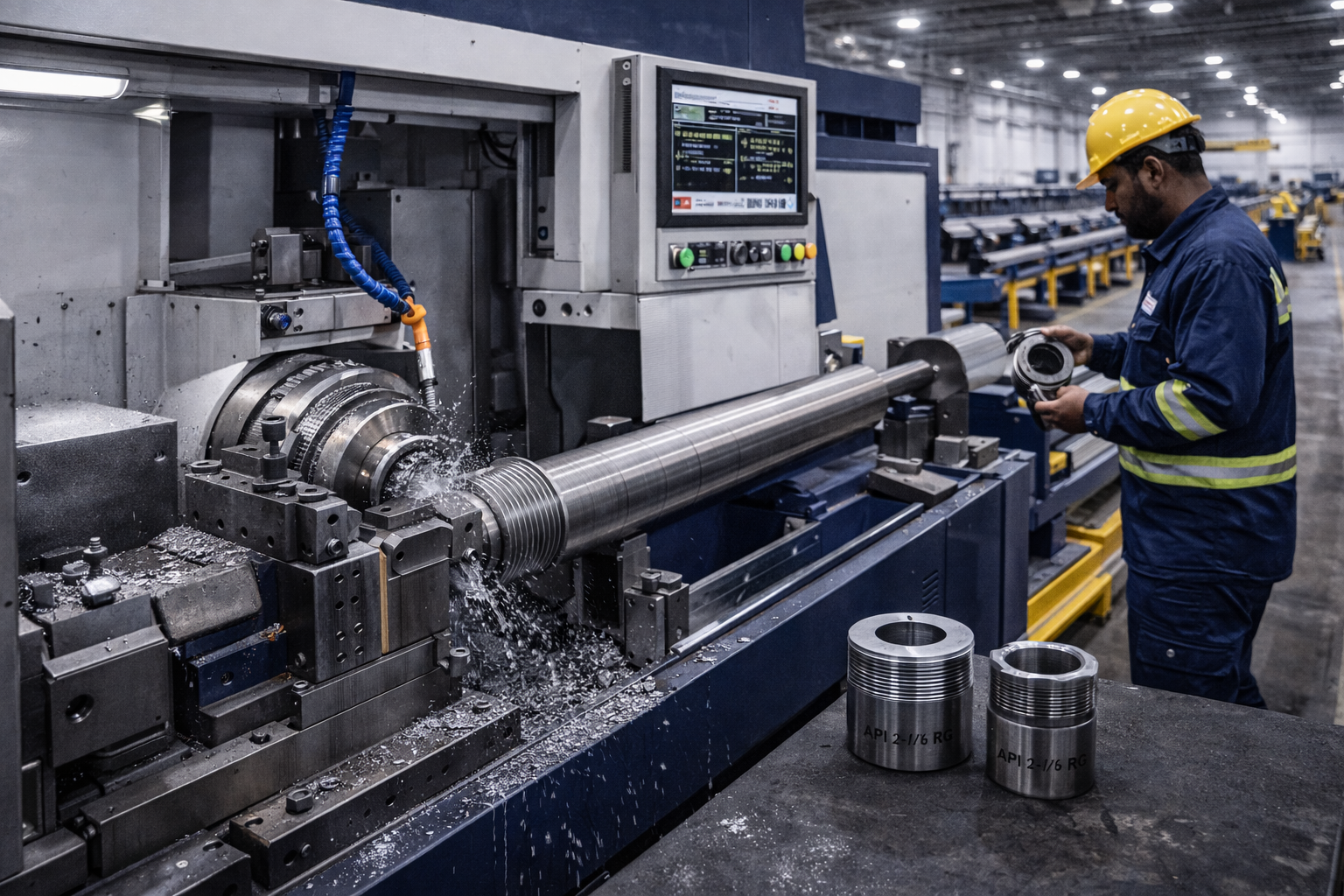
Threading operations create the mechanical connection features essential for oil & gas assemblies. Dedicated threading machines or specialized CNC stations cut or roll threads according to applicable standards. Integrated gauging and inspection systems verify thread geometry, pitch, and surface finish to ensure reliable assembly performance in demanding field conditions.
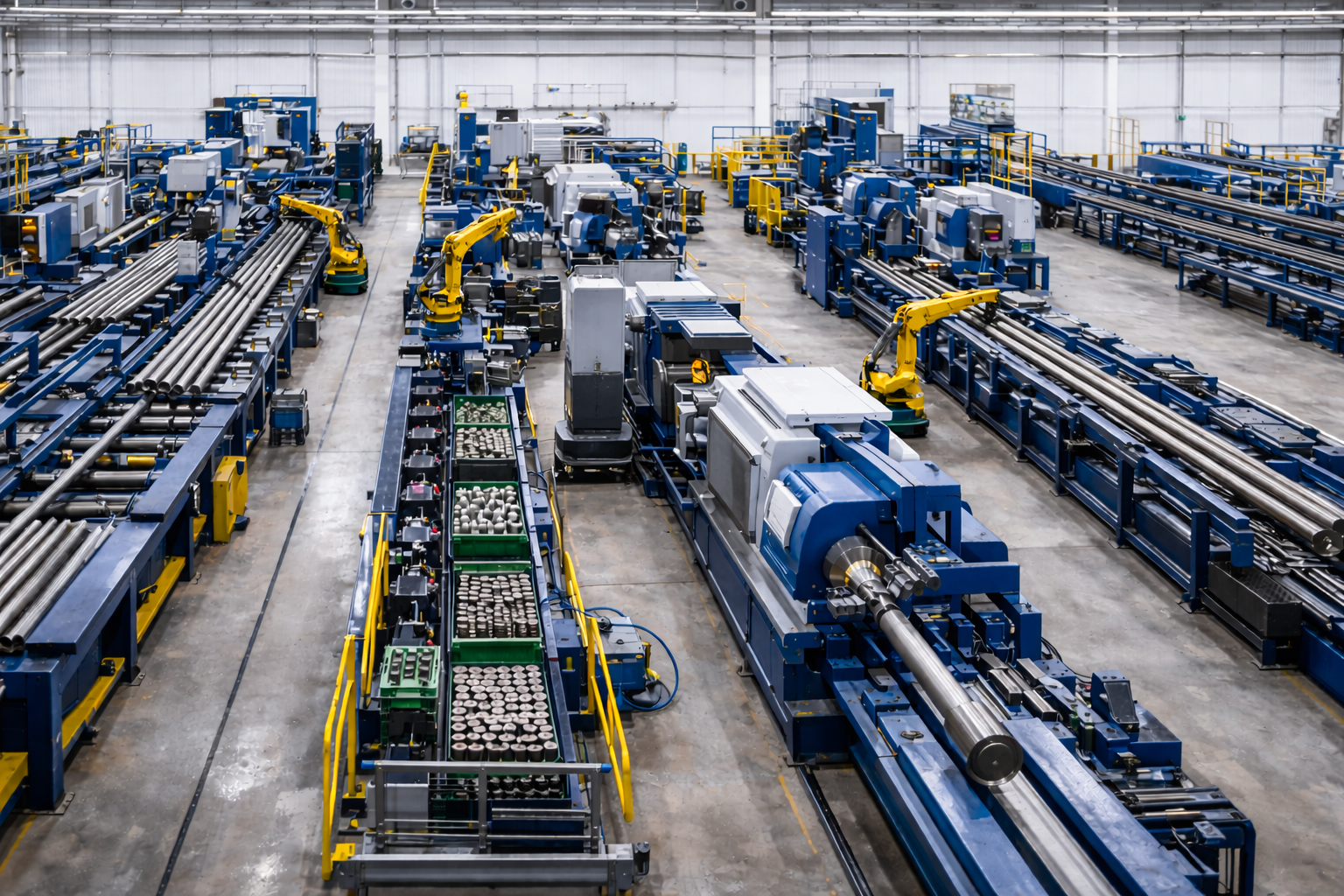
For manufacturers producing multiple component families, dedicated production lines are configured in parallel. Separate but coordinated lines may exist for rods, couplings, connectors, or shafts, each optimized for its specific process sequence. Material flow between machines is managed through roller systems, transfer units, and limited robotic assistance, supporting continuous production without excessive automation complexity.
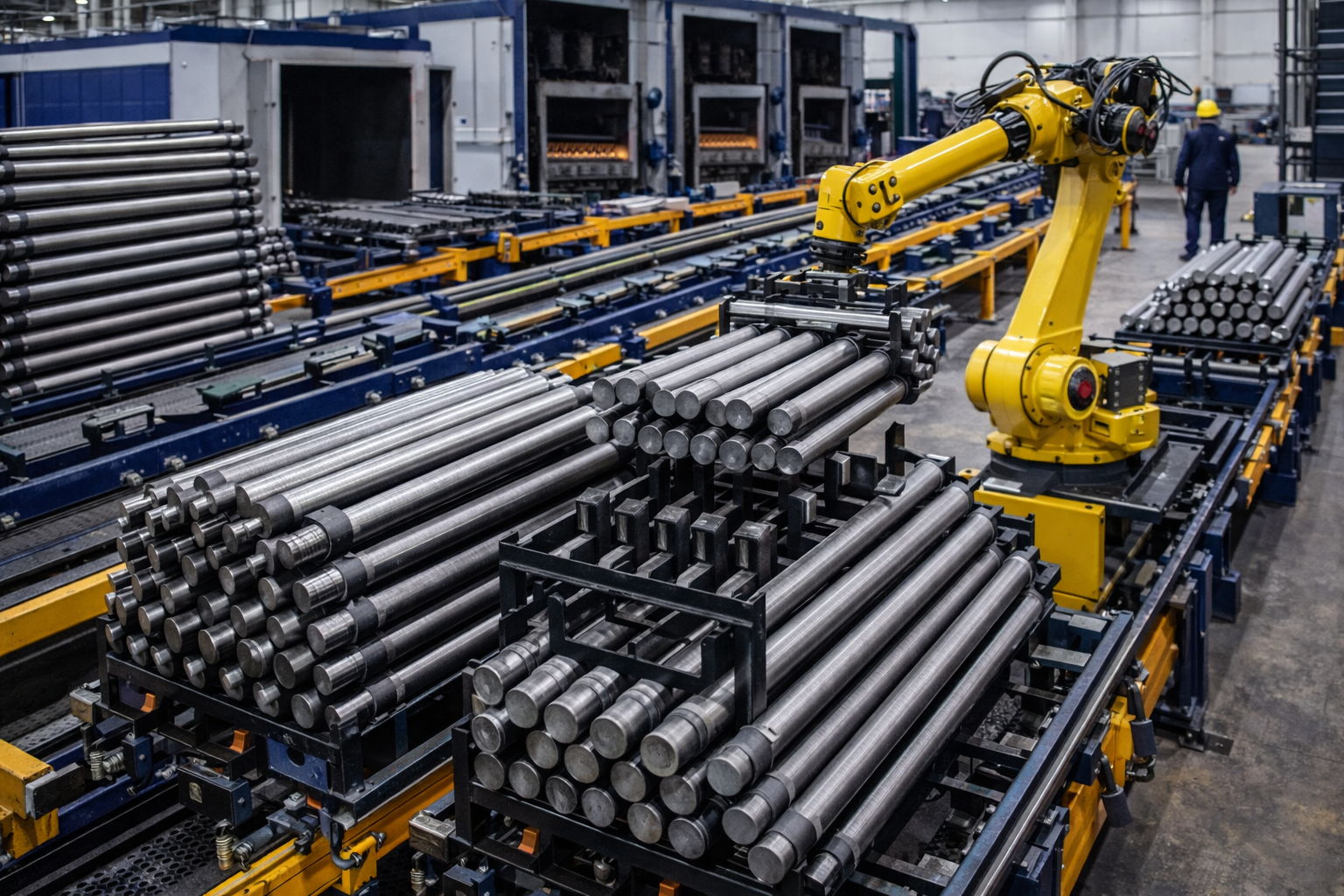
Before heat treatment, components are prepared and arranged using fixtures, trays, or handling systems designed to preserve geometry. This stage focuses on controlled positioning, batching, and logistical coordination rather than the heat treatment process itself. Proper preparation ensures that components can be processed efficiently while maintaining dimensional stability.
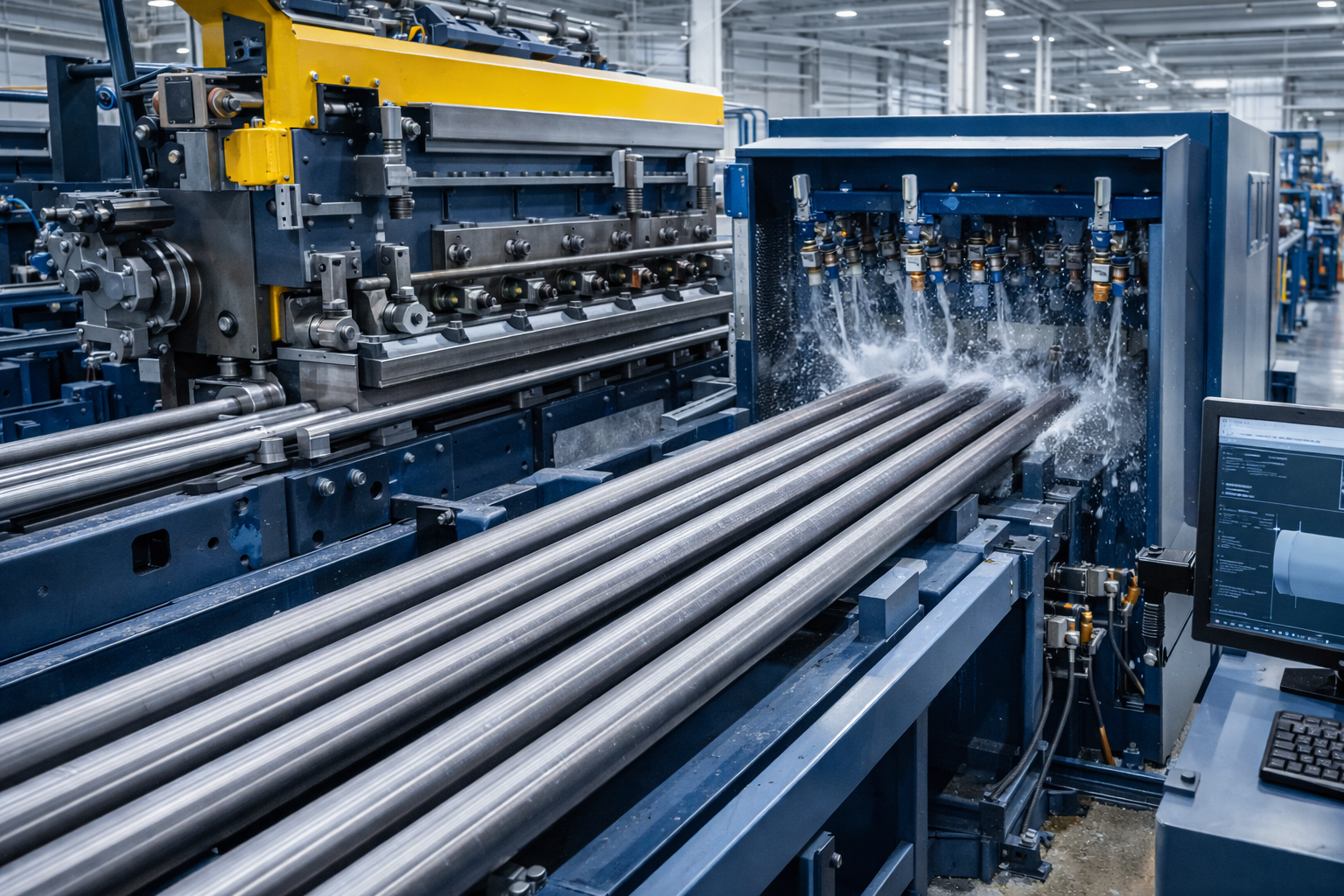
Surface treatment systems are used to achieve defined surface conditions and corrosion protection. Enclosed shot blasting units, coating lines, or chemical treatment systems prepare components for final use. These processes are integrated with controlled drying and handling systems to maintain consistency and throughput in oil & gas manufacturing environments.
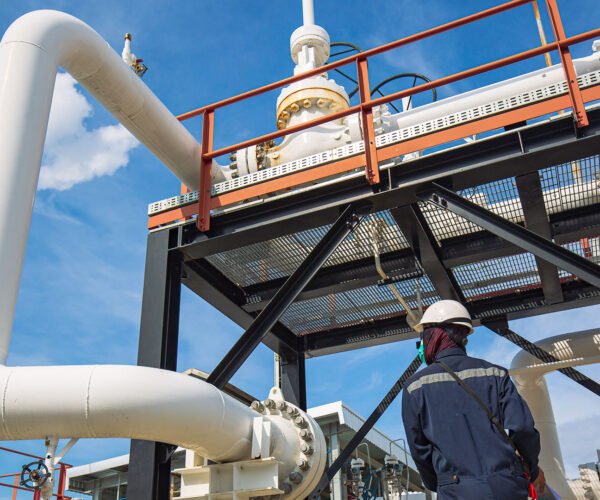
Pipeline systems, pumping stations, and structural installations used for the controlled transport of oil and gas across production, processing, and distribution networks.
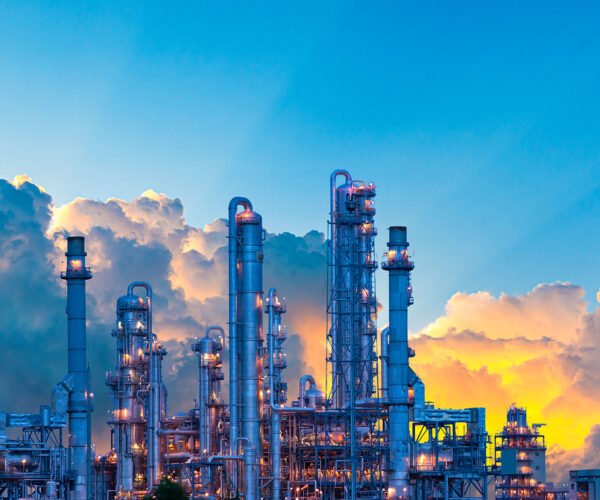
Large-scale refinery and processing facilities used for treating and converting produced hydrocarbons through distillation, separation, and downstream processing systems.
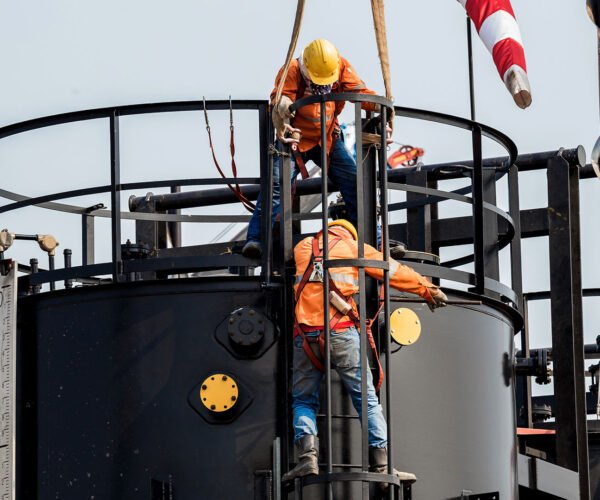
Mechanical systems and surface installations used at drilling and well sites, including rig-mounted equipment, pressure vessels, and operational platforms.
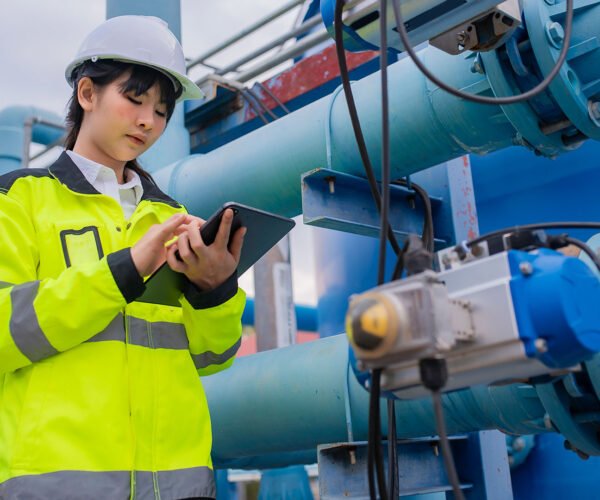
Instrumentation, control units, and monitoring systems used to supervise oil and gas production processes, equipment status, and operational performance.
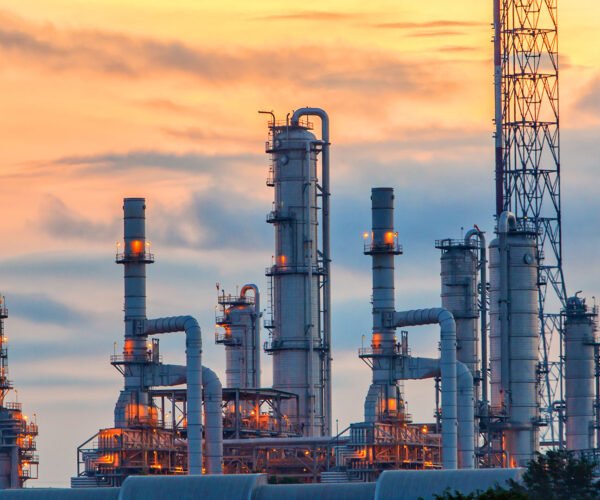
Facilities and systems designed to support emissions control, safety monitoring, and regulatory compliance across oil and gas production and processing sites.
Explore Service